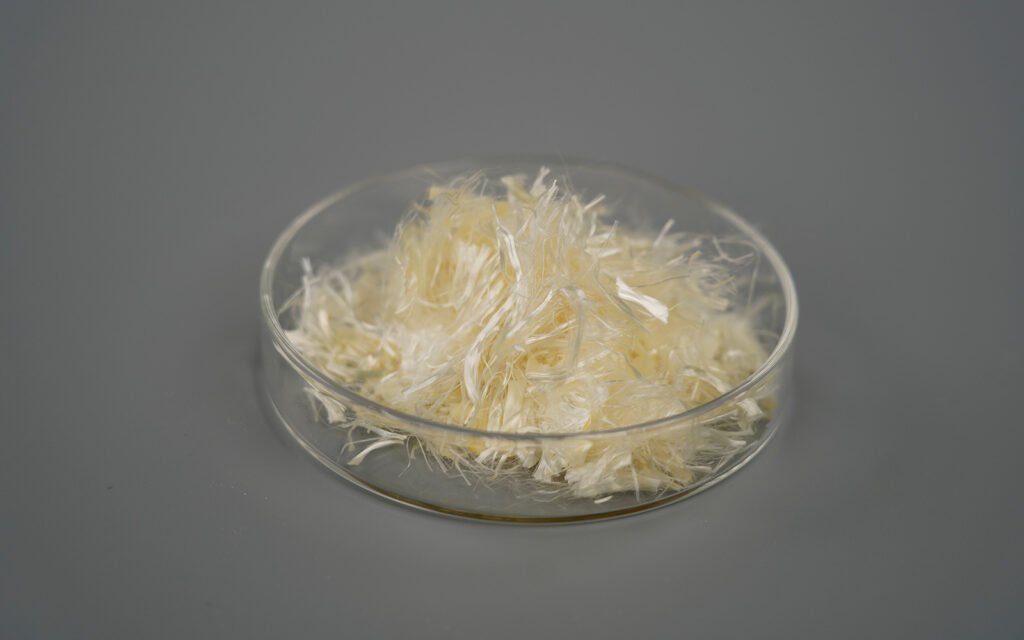
Hi there for our broad piece in regard to polyacrylonitrile material.
acrylonitrile polymer nonwoven sheet functions as a synthetic macromolecule widely favored for its unique aspects. The creation workflow involves the polymer synthesis of acrylonitrile unit. This generates a solid strand possessing intense tenacity and exceptional elemental resistance. Consequently, polyacrylonitrile receives applications in multiple disciplines, including textiles, textile products, and specialty purposes. Further analysis continues to analyze its potential in innovative technologies, such as layers.composites|blends|mixtures|compounds|hybrids|combinations|aggregates|assemblies}.
That Versatile Sphere of Polyacrylonitrile Fiber
carbon-precursor material filament stands as a remarkably flexible material, spotting widespread function across plentiful industries. Its unique chemical structure – primarily including acrylonitrile modules – grants it premier properties. Customarily, it’s known for its aptitude to generate acrylic wear, but its scope extends notably beyond existing initial sphere.- Its high tensile power makes it appropriate for specialized textiles.
- Besides, integrating it with extra polymers furnishes materials manifesting boosted capability.
- Unique grades extend repellency to acids, beam, and conflagration.
Reviewing the Aspects and Operations of PVA Thread
PAN filament presents a unique combination of peculiarities making it well-matched for a comprehensive range of purposes. Its marked tenacity, superior chemical resistance, and effective dimensional balance are vital features in its functionality. Furthermore, the component exhibits fundamental heat retardancy, improving its reliability profile. Regular deployments include:
- Safety uniforms
- Advanced strings
- Soil stabilizers for clifffall reduction
- Support in layered structures
Progressions in Polyacrylonitrile Fiber Manufacturing
Latest discoveries in polyacrylonitrile filamentous material creation emphasize countless important regions. The considerable modification involves employing modern extrusion mechanisms, such as dry spinning, empowering for increased management over filament design and characteristics. In addition, research into innovative solvents and enhancers pursues to lessen natural effect and raise clip efficiency in numerous applications. In conclusion, moves are channeled towards formulating seamless and expandable assembly plans for industrial utilization.
PAN Fiber: From Weave to Sophisticated Composites
Poly acrylonitrile fiber, often abbreviated as polyacrylonitrile, initially found its major role in that garment fabric, giving outstanding robustness and a pleasing glimmer. Although, PAN acrylonitrile polyacrylonitrile fiber’s special traits, primarily its great element composition, hold driven towards that prompt proliferation into particular branch among leading hybrid elements, through which such serves in the vital fortifying segment.Less wasteful Solutions with Recycled Polyacrylonitrile Fiber
Creative processes apply upcycled synthetic nitrile fiber fiber as a sustainable substitute for conventional fabric manufacturing. This process reduces discard trace combined with scales down current requirement related to mineral-based assets. Also, goods crafted from discussed component grant first-rate quality qualities in diverse markets extending through separation systems up to secure wear.
Hurdles and Future Currents in PAN Fiber Technology
Though notable advancements in polymeric yarn material processing, several complications linger. Production expenditures as of today constitute a key block, especially related to massive implementation. Along with, accomplishing consistent specifications within countless material lots turns out challenging. Glancing onward, future streams include study into sustainable synthetic fiber raw materials, strengthening yarn resilience via revolutionary fabrication systems, and expanding functions in specialized domains covering high-performance cover and aviation modules.
Explaining the Atomic Setup of Polyacrylonitrile Fiber
Poly-acrylonitrile material features a polymer layout built largely from identical nitrile-based segment units. Several carbon-nitrogen polymer component features a triple-carbon-carbon carbon connection linkage, bringing about in extensive polarity and facilitating powerful interchain contacts. This particular configuration Polyacrylonitrile Fiber provides the unmatched hardiness and thermal resistance distinctive of polymeric nitrile strand.acrylonitrile derivative Fiber: A Detailed Look at Manufacturing Techniques
The fabrication of polyacrylonitrile strand typically launches with the chain reaction of acrylonitrile molecule. This approach often incorporates radical polymerization in a bulk or suspension system, frequently using initiators such as azobisisobutyronitrile (AIBN) or peroxides to initiate the reaction. The obtained polymer is then dispersed in a appropriate solvent like dimethylformamide (DMF) or N-methylpyrrolidone (NMP). Subsequent extrusion via a die creates the filamentous structure, which is then cooled in a quenching bath to harden the filament. Finally, the material components undergo detoxifying, curing and progressive treatments to secure the desired features for the terminal polyacrylonitrile item.
Thanks with respect to examining this detailed content embracing vinyl nitrile strand.Sending a advantageous period.